
How to Make a Branded Upload Portal for Microsoft OneDrive
When a client needs to send you files, the upload page they see is a touchpoint in your customer experience. If that page shows Microsoft branding instead of yours, your brand disappears at a moment that should feel seamless.
A branded upload portal solves that. It's a custom upload page that carries your logo, your colors, your fonts, and your voice, while still sending files into your existing Microsoft OneDrive account. The uploader never sees Microsoft's branding, OneDrive's URL, or a sign-in prompt. They just see your brand, upload their files, and get a branded confirmation.
This guide walks through how to build one using EZ File Drop, a purpose-built tool that connects your OneDrive to a fully brandable upload experience with no coding, no hosting, and no design team required.
Why OneDrive's Native Request Files Isn't Enough for Client Work
Microsoft's native Request Files feature in OneDrive lets you collect files from anyone with a link, without requiring them to have a OneDrive or Microsoft account. It works, but it has specific gaps that make it a poor fit for client-facing work:
- Business accounts only. OneDrive's Request Files feature is only available on OneDrive for Business (Microsoft 365 work and school accounts). Personal OneDrive accounts, even paid ones, don't include it. It's also unavailable on Office 365 Government, Office 365 operated by 21Vianet, and Office 365 Germany.
- Your admin controls whether it's on. Request Files is tenant-wide on or off, controlled by your Microsoft 365 admin. You can't enable or disable it on a per-user basis.
- Microsoft branding, not yours. Upload pages show the OneDrive logo and Microsoft's styling. There's no way to add your logo, change the colors, or customize the page copy.
- Uploader's name only, no custom form fields. Request Files collects the uploader's first and last name, which it adds to the front of the filename. There's no way to collect an email address, project ID, or any other context alongside the files.
- No embed option. Request Files gives you a OneDrive sharing link, not embeddable code. Clients have to leave your website to upload.
- Notifications go only to the folder owner. There's no way to notify the uploader, your team, or a third party about new submissions.
For an internal Microsoft 365 team swapping files, Request Files is fine. For anything client-facing, the Microsoft branding and feature gaps cost you something every time a file is collected.
What a Branded Upload Portal Gives You
EZ File Drop's branded upload portals for OneDrive include:
- Your logo on the upload page, in email notifications, and on the success screen
- Custom colors, fonts, and page layout to match your website
- Custom page copy (headline, welcome message, drop zone text, success message) so the portal speaks in your voice
- Custom form fields for collecting context alongside the files (client name, project ID, email, categories, etc.)
- Automatic file organization in OneDrive using form field data
- White-labeling on Business and Premium plans (no EZ File Drop branding anywhere)
- Embeddable on any website (WordPress, Webflow, Squarespace, Wix, or any page that supports HTML embeds)
- Works with any OneDrive plan, including personal OneDrive accounts where Microsoft's native Request Files isn't available
Files still land directly in your OneDrive account, in the folders you choose, using your existing OneDrive storage. EZ File Drop is the branded front door. OneDrive is still the storage.
.avif)
Step 1: Connect EZ File Drop to OneDrive
Sign up here. Every new account starts with a 7-day free trial on the Business plan, no credit card required.
From the main dashboard, open Cloud Settings and click Connect to Microsoft OneDrive. EZ File Drop uses OAuth2 to link to your OneDrive, so your Microsoft password never leaves Microsoft. Approve the connection in the Microsoft authorization window and you'll be returned to EZ File Drop with OneDrive connected.
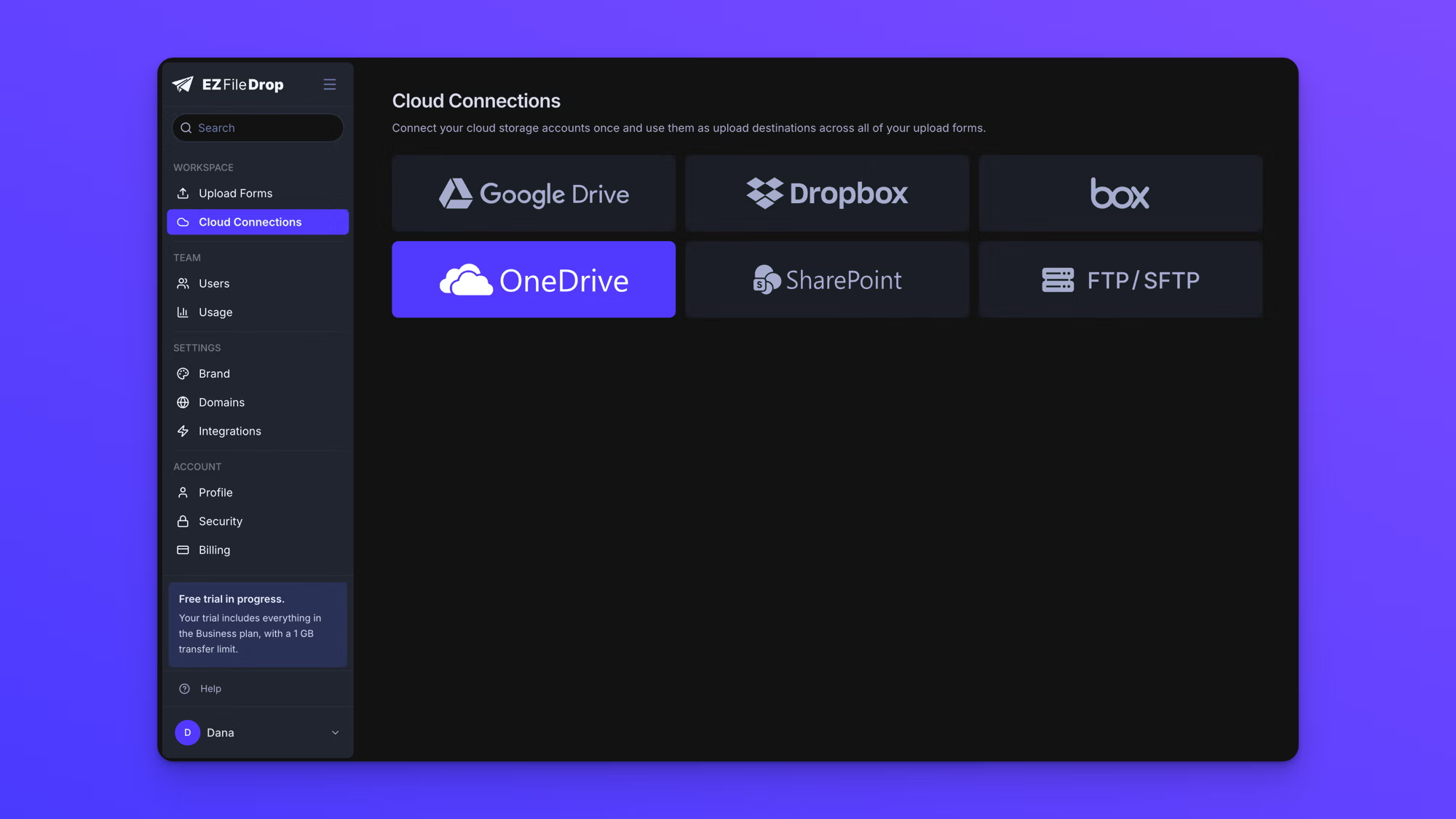
Unlike OneDrive's native Request Files, EZ File Drop works with any OneDrive account: personal, Microsoft 365 Family, Microsoft 365 Business, or Enterprise.
Step 2: Upload Your Logo and Brand Assets
From the main menu, click Upload Forms, then Create New Form. In the form editor, give your portal a name and upload your logo.
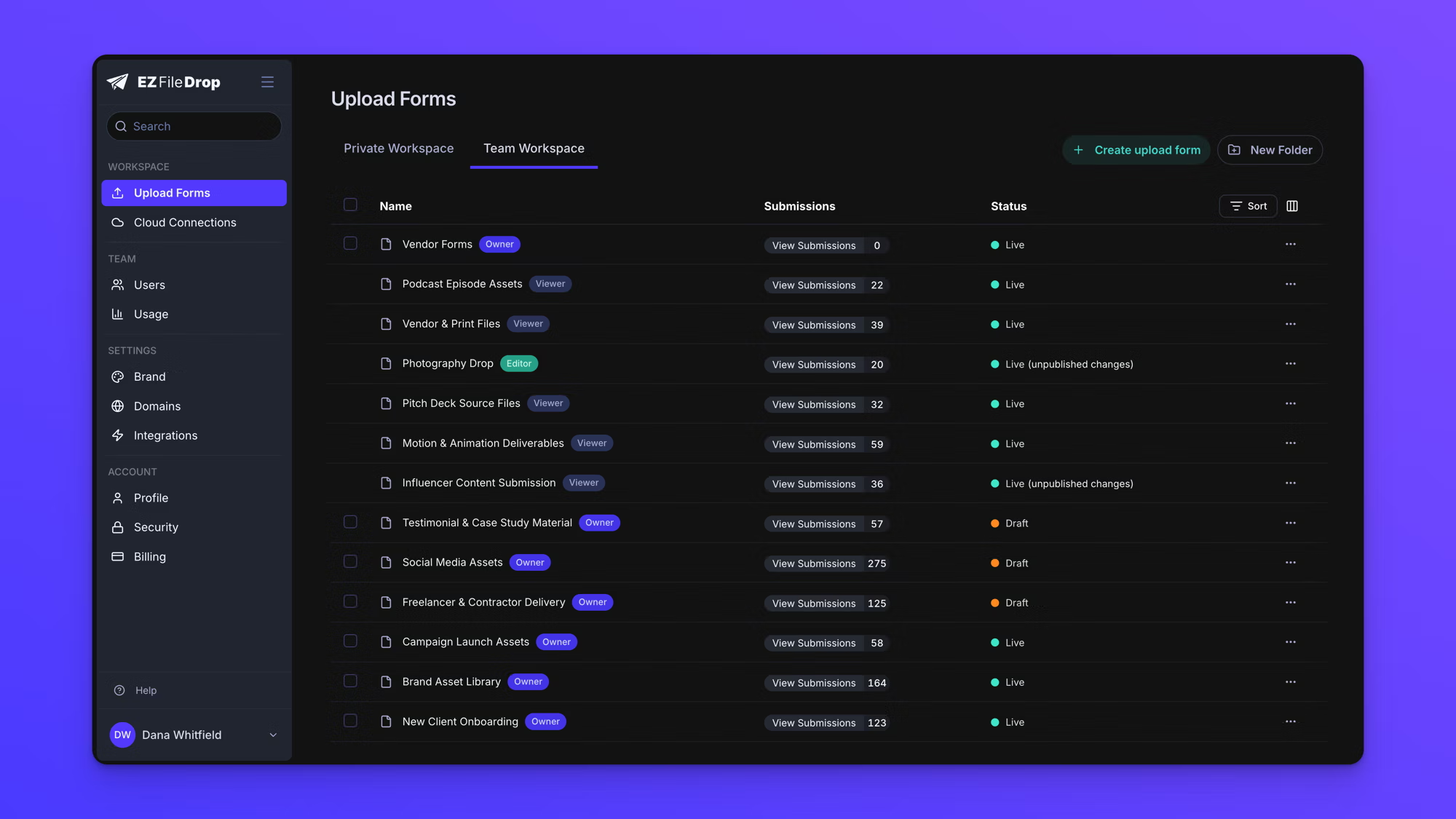
A few things worth knowing about the logo:
- It appears at the top of the standalone upload portal page
- It appears in email notifications (upload confirmation, team notification, third-party notification)
- It appears on the upload success screen after a file is submitted
- If you plan to embed the portal on your website without a logo above the form, the logo is still used in emails, so upload one even if you plan to hide it in the embed
Then add a page header and welcome message. This is your voice. Write copy that matches your brand: formal for legal or financial workflows, warm and conversational for creative work, whatever fits the relationship you have with the people sending you files.

Step 3: Customize Colors, Fonts, and Layout
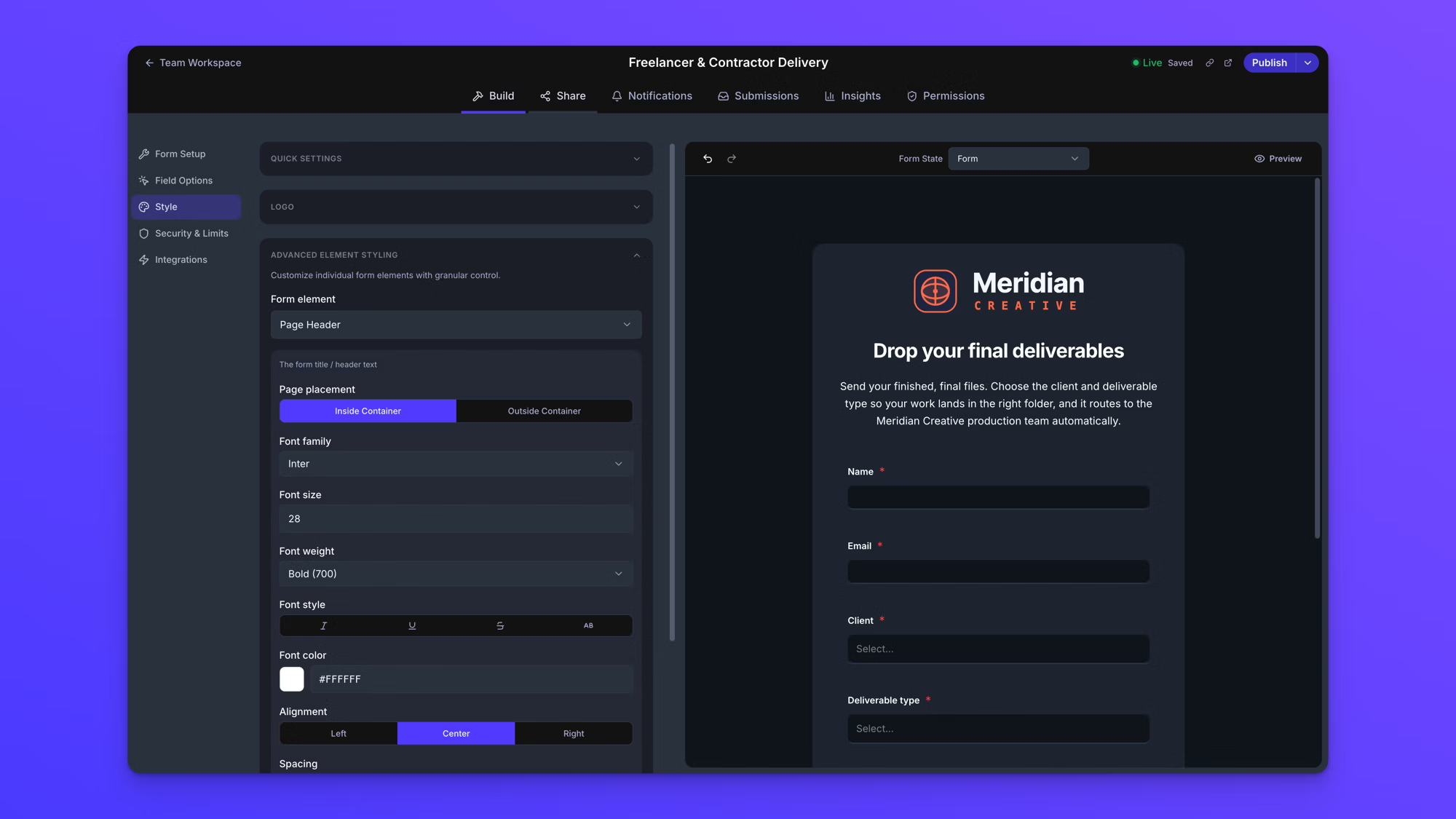
Open the Style editor to make the portal match your brand. The Form Element dropdown lets you toggle between every part of the portal and edit its styling individually:
- Logo area
- Page header
- Welcome message and body text
- Form field labels and inputs
- Drop zone and upload button
- Submit button
- Success message
- Background color and page padding
You can match your website's typography, color palette, spacing, and visual tone. On Business and Premium plans, the portal is fully white-labeled with no "Powered by EZ File Drop" footer and no EZ File Drop branding anywhere on the page or in the emails.
Step 4: Add Form Fields
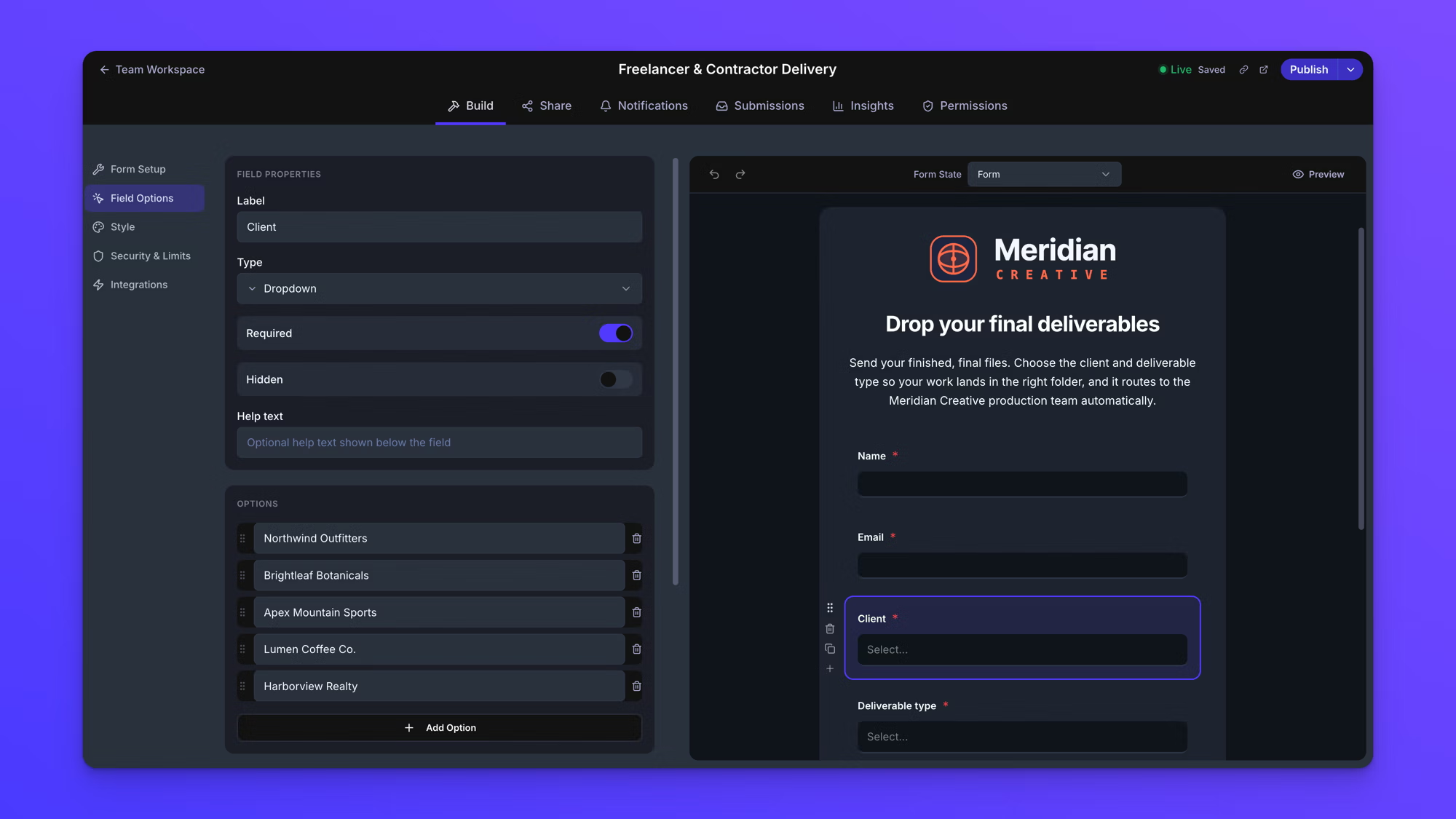
Form fields let your portal collect context alongside the files. EZ File Drop supports text fields, dropdown menus, checkboxes, and radio buttons. Any field can be marked required or optional.
Common fields for a branded upload portal include:
- Client or uploader name (used to organize incoming files)
- Email address (used to send upload confirmations)
- Project name or ID (used to route files into the right subfolder)
- Category or file type (dropdown for submission type)
- Notes or message (long-text field for context)
This is one of the biggest upgrades over OneDrive's native Request Files, which only collects a first and last name. For longer intakes, conditional logic shows or hides fields based on earlier answers, so the form stays clean and each person only sees the questions that apply to them. Field values can also be used to automatically organize incoming files in OneDrive. More on that in the next step.
The file upload field itself is also configurable. You can require it, set a maximum number of files per submission, restrict which file types are accepted, and set a per-file size limit based on your EZ File Drop plan.
Step 5: Point the Portal at OneDrive and Set Up File Organization
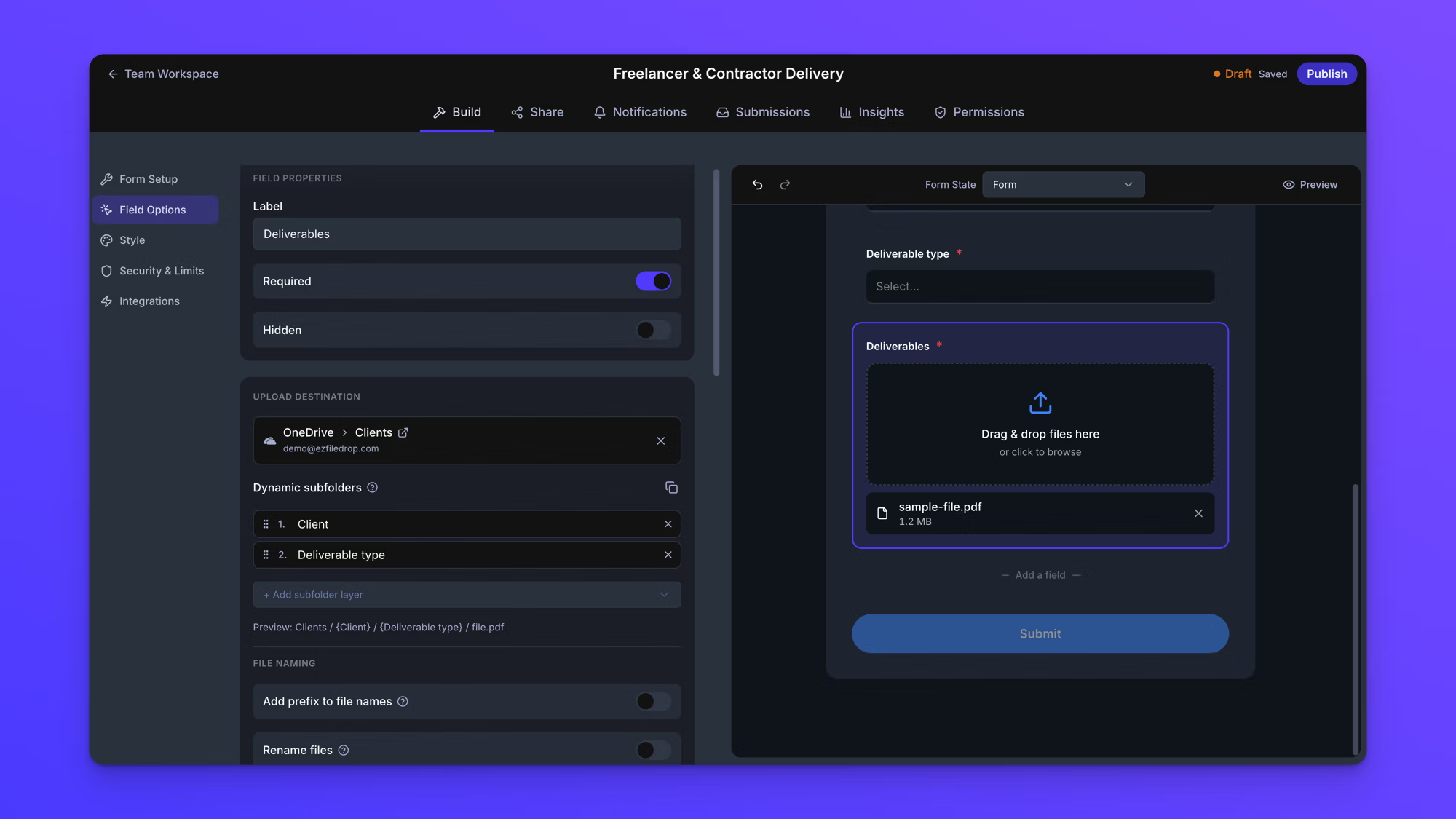
In the Cloud Destination section, select the OneDrive folder where uploaded files should land. Then use the dynamic file organization settings to automatically create subfolders and rename incoming files based on form field data.
For example, a portal that collects a client name and an uploader name could route each file into a subfolder named after the client, with the uploader's name added to the front of the filename. So a photo from Sarah Johnson for the Northwind Outfitters project arrives in your OneDrive as "Sarah Johnson - headshot.jpg" inside a "Northwind Outfitters" folder. No manual sorting, no lost files.
Because EZ File Drop reuses folders that already exist, new uploads go to the right place instead of spawning duplicate folders. The second submission tagged "Northwind Outfitters " goes into the same Website Redesign folder as the first.
Step 6: Publish and Share the Portal
Click Save and Publish. Your branded upload portal is live immediately.
Share as a Standalone Page
Every portal has its own unique URL, and the URL slug is editable, so the link reads like something you chose instead of a random string. Share the link directly over email, in a proposal, or in a contract. No hosting, no configuration. If you want share links to run on your own domain, a custom domain is available on the Premium plan.
Embed on Your Website
Copy the embed code and paste it into your site. The embedded portal carries all your branding and fits seamlessly into your page design. Toggles let you show or hide the logo, header, and page text so the embedded version matches its surrounding page. Works on WordPress, Webflow, Squarespace, Wix, or any HTML-supporting site.

Once files start arriving, you don't have to dig through the OneDrive folder to see what came in. Every submission also appears in your EZ File Drop dashboard, where you can browse uploads, read the form fields attached to each one, and search by person or file name.
Branded Portal vs. OneDrive Request Files
If you're considering OneDrive's native Request Files as an alternative, here's how the two compare on the dimensions that matter.
If you're building the same kind of portal for a different cloud, this guide has siblings for Google Drive and Dropbox that follow the same playbook.
Frequently Asked Questions
Do the people uploading need a Microsoft account?
No. Anyone with your form link can upload through your branded portal with no Microsoft account, no EZ File Drop account, and no sign-in of any kind. The OneDrive connection is yours alone; uploaders never touch it.
Does this work with personal OneDrive accounts?
Yes, and that's a real difference from Microsoft's native Request Files, which only works on OneDrive for Business. EZ File Drop connects to any OneDrive account: personal, Microsoft 365 Family, Microsoft 365 Business, or Enterprise. No tenant admin, no enablement, no policy check.
Where do the uploaded files actually go?
Into the OneDrive folder you choose when you build the form. EZ File Drop doesn't keep your files. Every submission routes through to your OneDrive and stays there, in the folders you already use.
Can I put the upload portal on my own domain?
Yes, in two ways. You can embed the form on a page of your own site so the URL the client sees is your domain, available on the Business and Premium plans. For share links and notification emails to run on a fully custom domain, that's a Premium plan feature.
Which branding features are on which plan?
Every plan connects OneDrive and includes the drag-and-drop form builder and share links. Your logo, custom colors and fonts, white-labeling, and embedding are part of the Business and Premium plans. Custom domains on share links and email are Premium. The 7-day free trial runs on the Business plan, so you can test the full branded experience before deciding.
Will the people uploading be able to see each other's files?
No. Each submission is private. Unlike a shared OneDrive folder, where anyone with folder access sees its contents, people uploading through your portal only ever see their own upload.
Start Collecting Files Through a Branded OneDrive Portal
Setting up a branded upload portal for OneDrive takes about five minutes. The files still live in your OneDrive, organized exactly how you want, using your existing storage. The only thing that changes is the experience your clients see when they send files to you. Now, it's yours.
Start a free trial with no credit card required. For more detail on how the OneDrive integration works, see the OneDrive integration page.
Written by Eric Stracke