
How to Make a Branded Upload Portal for Google Drive
When a client hands off files, the experience should feel like working with you, not with Google. A branded upload portal for Google Drive replaces the generic "Untitled Form" page with your logo, your colors, and your instructions, while files still land directly in your Drive. It turns a transactional handoff into a brand touchpoint.
This guide walks through exactly what to brand, how to set it up, and the design decisions that separate a portal clients trust from one that feels like a DIY workaround.

Why a branded upload portal matters more than a generic form
Google's built-in options work, but they all show Google's branding, not yours. Google Forms displays the Google logo, uses Google's font stack, and requires uploaders to sign in to a Google account before they can submit anything. Shared folders are messy too, since anyone with the link can see the contents of the folder itself. Neither feels professional when a new client is sending over sensitive onboarding files or a high-value asset.
A branded upload portal sends a different signal. It tells the uploader that your business handles intake the way it handles every other client-facing interaction: intentionally, consistently, and with care. For agencies, law firms, accountants, and anyone whose first impression sets the tone for a project, that difference is worth the ten minutes it takes to build one.
EZ File Drop is built specifically for this. It adds a branded intake layer on top of your existing Google Drive. Files still go exactly where they always have, into your Drive and in the folders you already use, but the uploader sees your brand instead of ours or Google's.
The six elements you can actually brand
A branded portal is more than just dropping a logo on a form. Here are the customization points worth thinking through before you start building.
Logo
On the Business and Premium plans, upload your own logo to sit at the top of the upload page. Use the same version of the logo the client sees elsewhere in your brand: the one you'd put on an invoice or a proposal PDF.
Colors and fonts
EZ File Drop's style settings let you customize the colors and fonts on the form to match your brand. The cleanest approach is to pull the exact hex codes from your existing brand guide rather than eyeballing them, and use the same font you already use on your site. Custom colors and font styling are part of the Business and Premium plans.
Page copy and success message
The form's headline, field labels, and the success message shown after submission are all editable. Default copy like "Thank you" becomes a message that tells the client what happens next and when to expect a follow-up. This is the part most teams skip, and it's what makes a form feel like it actually came from your business.
Editable form slugs
Every form has its own editable slug, so the end of the link reads like something you chose, client-intake or project-files, instead of a random string. A link a client can recognize at a glance adds a small but real layer of trust when you're sharing it over email or in a proposal. If you want the link to live on your own domain instead, a custom domain on share links is available on the Premium plan.
Email notifications
Most form tools send ugly default emails from a no-reply address. EZ File Drop lets you brand the confirmation and notification emails with your logo and custom messaging, or replace the default templates entirely with custom HTML. On the Premium plan, those emails carry your custom domain too, so the branding holds from the form all the way into the inbox. Most teams forget this step. It's also the part clients see twice: once on the form, and again in their inbox.
Embed, don't redirect
If your site already has a branded "Send Us Files" page, embed the form directly into it instead of linking out to a separate portal. WordPress, Webflow, Wix, and Squarespace all accept the embed code with no plugins required.
Step-by-step: build the portal
Here's the actual setup flow, focused on the branding decisions at each stage.
1. Connect Google Drive and pick your destination
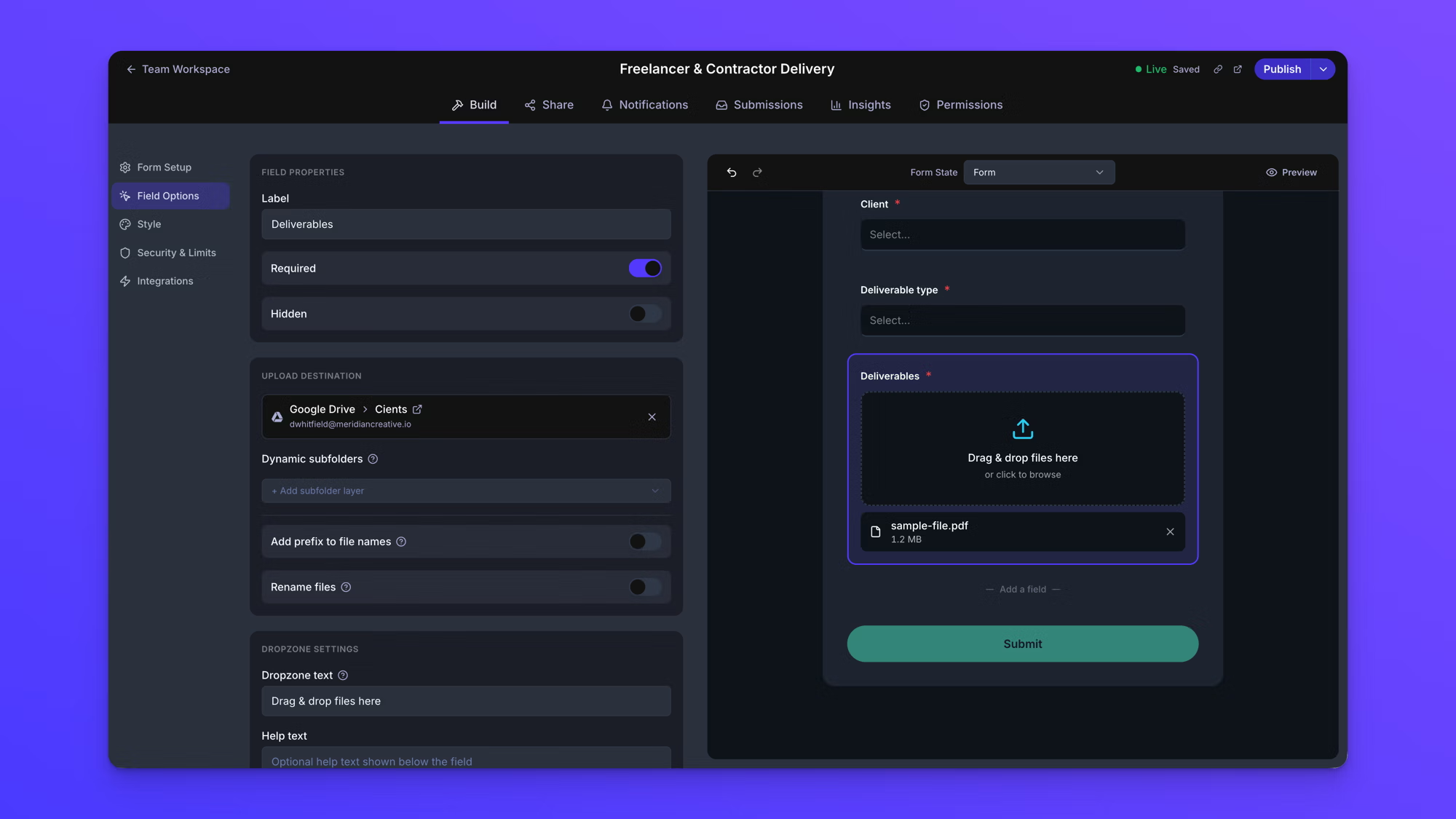
Sign into EZ File Drop and connect your Google account with OAuth. Choose whether uploads go to My Drive or a Shared Drive. Shared Drive is usually the right call for team workflows, since files inherit team permissions automatically instead of sitting under one person's account.
Then point to a specific folder. For most use cases, a top-level folder called something like Client Uploads works well, with dynamic subfolders created per submission underneath it. Because EZ File Drop reuses folders that already exist, new uploads go to the right place instead of spawning duplicate folders.
2. Apply your visual brand
This is the step that actually makes it a branded portal. In the form's style settings, upload your logo and set the color values. Use the exact hex codes from your brand guide. If you don't have one, pull the colors from your website's CSS.
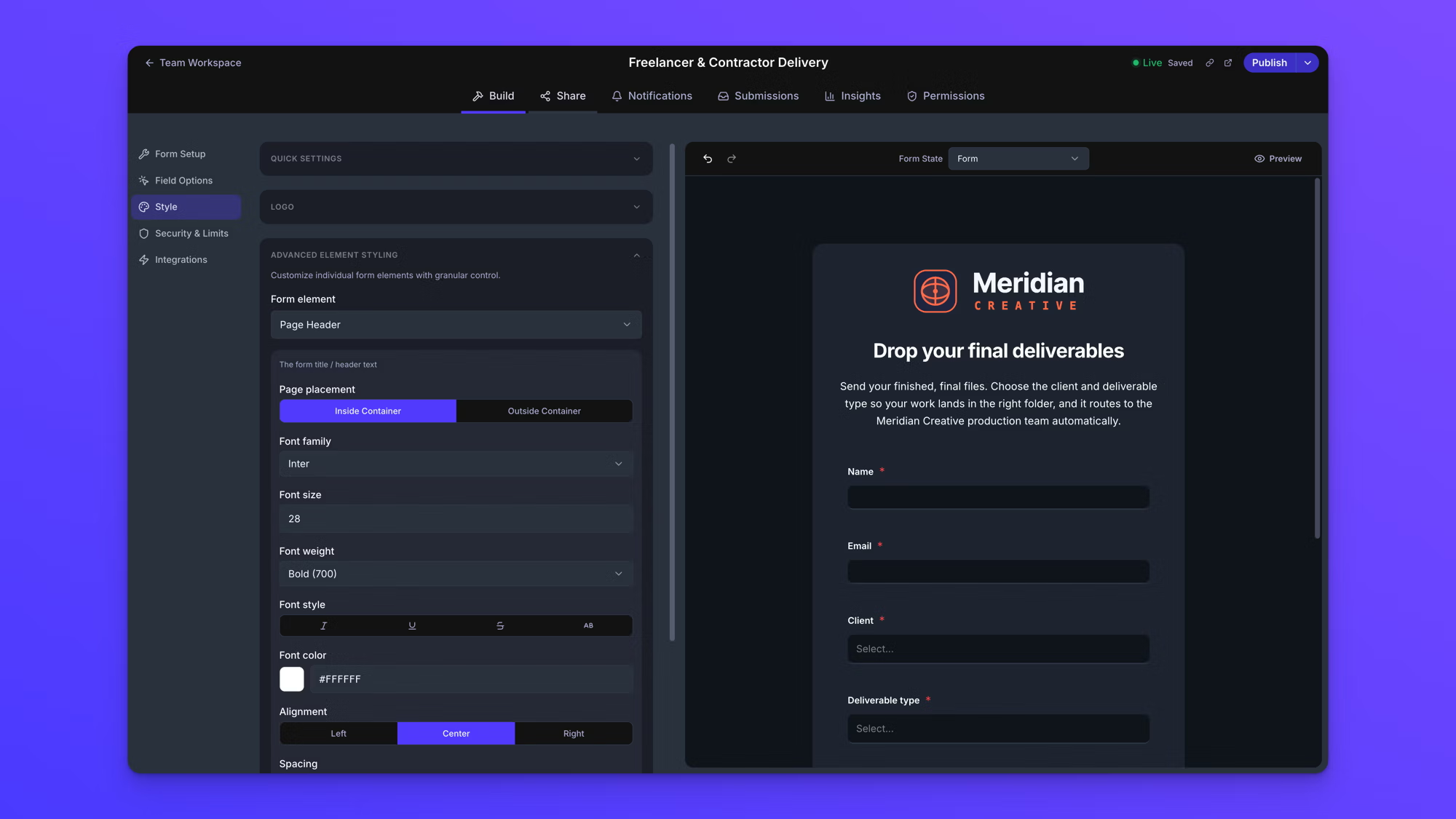
A few specifics that matter:
- Match the primary button color to your website's primary CTA color. Clients reading the form will subconsciously connect the two.
- Set a background color or upload a subtle background image. A plain white background can make the form feel unfinished.
- If you're embedding the form on an existing page, turn off the EZ File Drop header so the form blends into the surrounding page design.
3. Write the copy in your voice, and add the fields you need
Default form labels work, but they're generic. A few places to rewrite:
- Page headline: something like Send Us Your Project Files instead of just the form title
- Field labels: What are you working on? reads more like your voice than a clinical Project Type
- Success message: tell the uploader what happens next. Thanks, we've got your files. Your project manager will follow up within one business day.
This is also where you add the fields that make each submission useful. Alongside the files, collect a name, a project number, a category, or anything else you need. Those custom fields can drive the dynamic subfolders from step 1, so a submission tagged with a client name is delivered into that client's folder automatically. For longer intakes, conditional logic shows or hides fields based on earlier answers, so the form stays clean and each person only sees the questions that apply to them.
The copy is the highest-leverage change most teams skip. The form takes ten seconds to rebrand visually, but the copy and fields are what make it feel like it came from your business specifically.
4. Configure branded email notifications
When a file comes in, EZ File Drop can send notifications to three recipient groups: the uploader (confirmation), your team, and any third-party recipients you want to loop in. Each of these is worth branding.
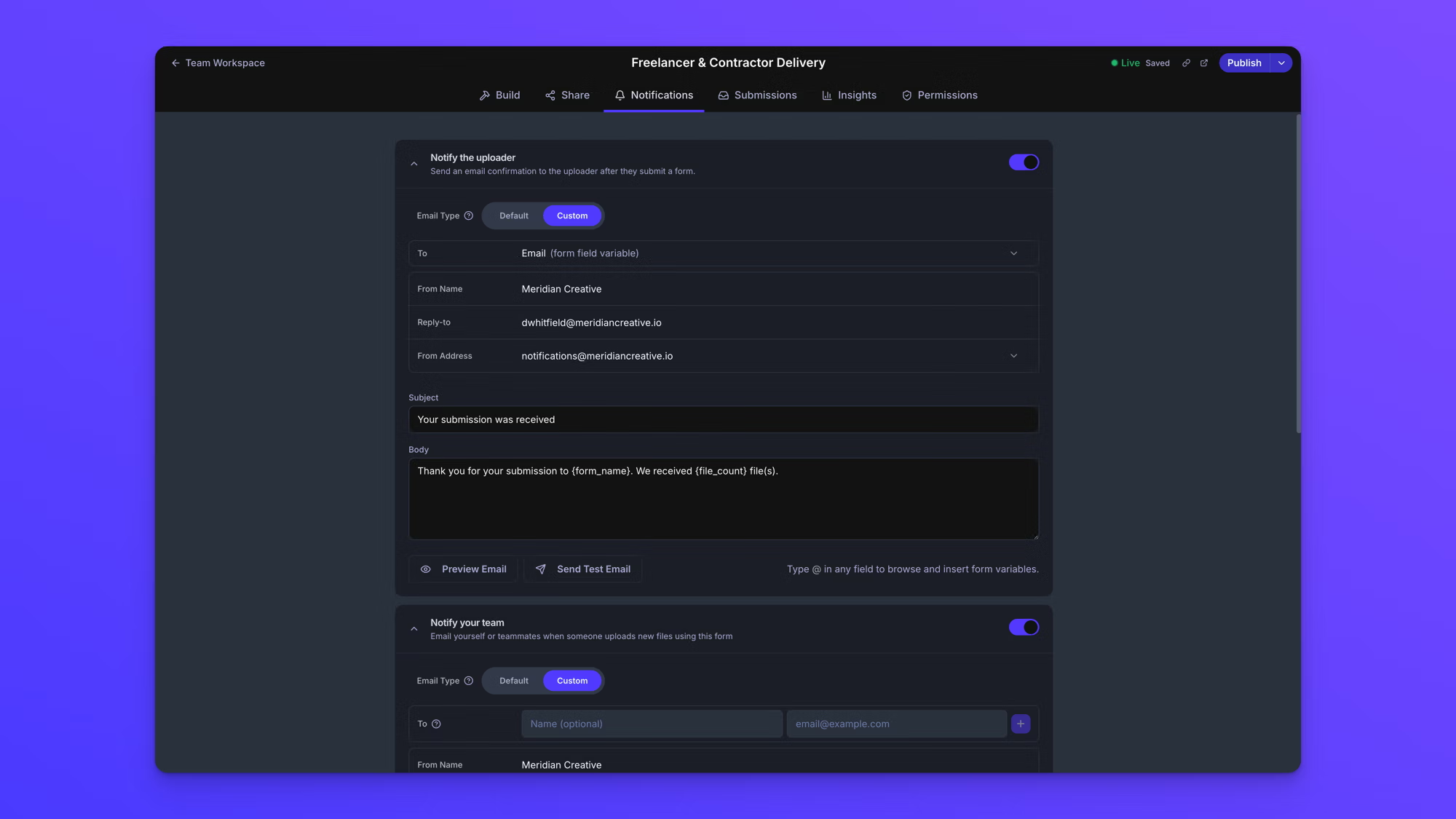
Use the default email templates with your logo and custom messaging, or paste in your own custom HTML to match your brand exactly. For the uploader's confirmation email especially, this is a second brand impression right after they submit.
5. Publish on a branded URL or embed it
Two options, both valid depending on your setup.
The standalone URL approach gives you a shareable link with your editable slug at the end. Send it directly to clients, link to it from your email signature, or include it in a proposal. It's fast and requires no website changes.
The embed approach drops the form into an existing page on your own domain. The URL the client sees is yourcompany.com/send-files, which keeps the entire interaction on your domain from start to finish. EZ File Drop gives you a copy-paste embed snippet that works on WordPress, Webflow, Wix, and Squarespace with no plugins.
.avif)
6. Test the full experience end-to-end
Before sharing the URL with a real client, run through it yourself as if you were the uploader:
- Submit a test file from a phone (most clients will upload from mobile)
- Confirm the file arrived in the correct Drive folder
- Check that the confirmation email looks right in an actual inbox, not just in preview
- Make sure the success page displays the copy you wrote
This step catches the small issues: a field label that wraps awkwardly on mobile, a notification email that got routed to spam, a folder name missing a submitted value.
Once files start arriving, you don't have to dig through the Drive folder to see what came in. Every submission also appears in your EZ File Drop dashboard, where you can browse uploads, read the form fields attached to each one, and search by person or file name.
What a branded portal looks like in practice
Here's a quick view of how different businesses use this.
The pattern across all of them: the portal reflects the business, not the tool. That's the point.
A quick note on Google Drive specifics
Because everything flows into your existing Drive, a few Google-specific details are worth knowing.
Shared Drives work well for team intake because Google Workspace treats them as team-owned storage. Files don't count against any single user's quota, and anyone with Shared Drive access can view incoming submissions without extra sharing steps.
If you're on a personal Google account instead of Workspace, My Drive is your only option, and uploads count against your personal 15 GB (or whatever your Google One tier provides). For high-volume intake, this is usually the point where upgrading to Workspace or Google One makes sense.
For a deeper look at how the integration works, see the Google Drive integration page.
Frequently asked questions
Do the people uploading need a Google account?
No. Anyone with your form link can upload through your branded portal with no Google account, no EZ File Drop account, and no sign-in of any kind. The Google connection is yours alone; uploaders never touch it.
Where do the uploaded files actually go?
Into the Google Drive folder you choose when you build the form. EZ File Drop doesn't keep your files. Every submission routes through to your Drive and stays there, in the folders you already use.
Can I put the upload portal on my own domain?
Yes, in two ways. You can embed the form on a page of your own site so the URL the client sees is your domain, available on the Business and Premium plans. For share links and notification emails to run on a fully custom domain, that's available on the Premium plan.
Which branding features are on which plan?
Every plan connects Google Drive and includes the Quick Style Settings for basic styling. Uploading your own logo, custom colors and fonts, and removing EZ File Drop branding from the form are part of the Business and Premium plans. Custom domains on share links and email are Premium. The 7-day free trial runs on the Business plan so you can test the full branded experience before deciding.
Can I embed the branded form on my website instead of linking out?
Yes. EZ File Drop gives you an embed snippet that drops the form into an existing page, and WordPress, Webflow, Wix, and Squarespace all accept it with no plugins. You can turn off the EZ File Drop header so the form blends into your page design.
Will the people uploading be able to see each other's files?
No. Each submission is private. Unlike a shared Drive folder, where everyone with access sees everything, people uploading through your portal only ever see their own upload.
Getting started
A branded Google Drive upload portal is less about the technology and more about the decision to treat intake as part of your client experience. Once it's set up, every file that comes in does so through a channel that looks, sounds, and feels like your business, not a generic form.
You can start a free trial of EZ File Drop with no credit card required. The 7-day trial runs on the Business plan, which includes the branding and embedding features covered above.
Written by Matt Townley