
Can You Upload to Dropbox Without an Account? Yes, Two Ways
If you searched this, you probably want a client, a vendor, or a group of people to send files to your Dropbox, and they do not have Dropbox accounts. Dropbox's help center says uploading requires an account. That is true for shared folders, and it is the reason so many people hit a wall when they send someone a folder link and ask them to upload.
There are two ways around it. Dropbox's own File Request feature gives anyone a link to upload into one folder, and it works, with conditions covered below. EZ File Drop gives you a branded upload form that collects the details you need alongside the files and delivers everything into your Dropbox, sorted into folders automatically. This guide covers both, where File Request stops, and how to set up the form.
.avif)
How Do I Allow Others to Upload Files to My Dropbox?
There are three real options. Dropbox’s native File Request feature works for basic use, shared folders work for trusted collaborators, and third-party tools like EZ File Drop solve the cases where the first two do not fit.
Option 1: Dropbox File Request (the basics)
Dropbox’s File Request feature lets anyone upload files to a specific folder in your Dropbox account without needing an account themselves. You generate a link, share it, and uploaders can submit files that land in your chosen folder. It works without sign-in, which is the most important feature for external file collection.
The catch is what File Request cannot do. We cover this in detail in our review of whether Dropbox File Request can be used to collect files from people, but the short version: no form fields beyond a name, no custom branding, no automatic file organization, no embedding on external websites, and notifications that go to one person only.
Option 2: Shared Folders (risky for external collection)
You can share a Dropbox folder with Editor access and let collaborators drop files into it. This works for trusted teammates but creates real problems for client-facing or external file collection: every editor can see and modify all files in the folder, including files submitted by other uploaders. There is no log of who uploaded what, no automatic notifications when new files arrive, and no way to keep submissions private from each other.
For one-off file swaps with a known colleague, shared folders are fine. For collecting from clients, vendors, or the public, the privacy gaps are real.
Option 3: EZ File Drop (the purpose-built option)
EZ File Drop is built specifically for this: Letting anyone upload files into your Dropbox without a Dropbox account. The uploader sees a simple branded page, drops their files in, and the files land exactly where you told EZ File Drop to put them. No File Request limitations, no shared-folder privacy risks.
Here’s how it works.
Connect EZ File Drop to Dropbox through the Cloud Settings menu. EZ File Drop uses OAuth2 to link to your Dropbox account, so your Dropbox password never leaves Dropbox. This works with any Dropbox account, including free personal accounts, Plus, and Business.
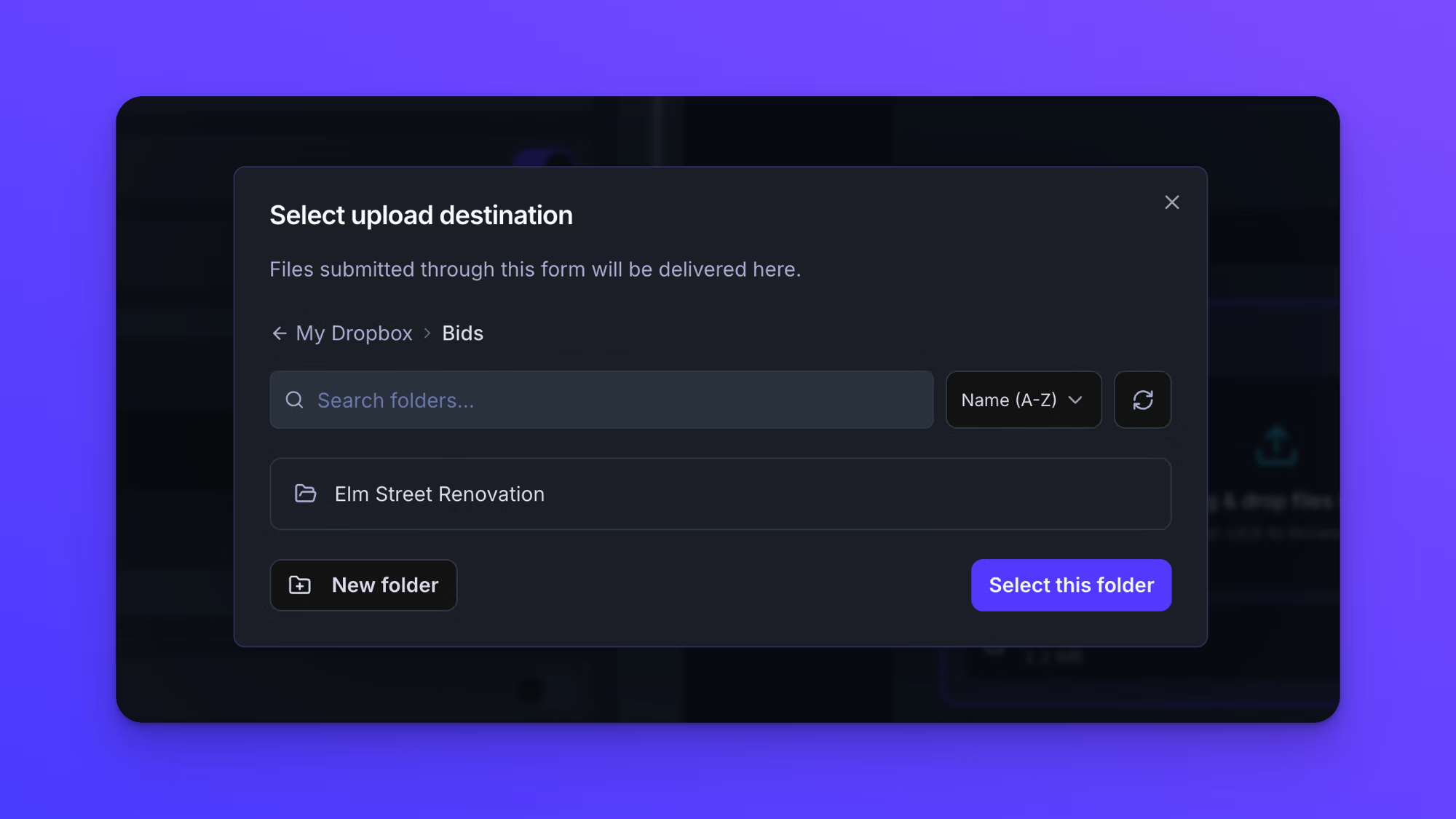
Create an Upload Form. Click “Upload Forms,” then “Create New Form” to open the form editor. This is where you set the form’s name, logo, colors, messaging, and destination folder in Dropbox. For the full breakdown of how to design a branded Dropbox upload portal, see the dedicated guide.

Configure file settings. Set allowed file types, a maximum file size per upload, and whether uploaders can submit multiple files at once. File size and type controls are available on the Business plan and above.
Add form fields. Collect context alongside the files: name, email, project number, category, or anything else. Form field data can automatically create subfolders in Dropbox and rename incoming files, so you never have to sort incoming files manually. You can also use conditional logic to show or hide fields based on earlier answers, so a longer intake form stays clean and each person only sees the questions that apply to them.
Publish and share. Once live, your upload form has its own shareable URL and can also be embedded on your own website.
Receive uploads automatically. Every submission is delivered into the Dropbox folder you selected, with no need to share the folder or grant access to the uploader. If your form collects context like client name or project ID, EZ File Drop can automatically create named subfolders in your Dropbox for each submission.
What Dropbox File Request Can’t Do
Dropbox File Request handles the basic case of “let someone upload a file to my account without an account.” For any workflow more sophisticated than that, the gaps are significant. Here’s what File Request specifically does not offer:
- No form fields beyond the uploader's name. File Request only collects the file. There is no way to require a name, email, project number, document type, or any other context. If you need information about who uploaded what, File Request does not help you collect it.
- No custom branding. Every Dropbox File Request page shows the Dropbox logo and your Dropbox avatar. You cannot add your logo, change colors, customize messaging, or make the upload page feel like part of your brand. For client-facing workflows, this is a real problem because clients see Dropbox, not your firm.
- No automatic file organization. Files arrive in the destination folder as a flat list. There is no way to organize uploads into subfolders by client, project, or date based on who is submitting. You sort them manually after the fact.
- No embedding on external websites. File Request links live on dropbox.com. You cannot embed the upload form on your own website, which means the user has to leave your site to upload.
- Limited notifications. Notifications go to the Dropbox account owner only, with no way to notify additional team members or third parties. The uploader does not receive a customizable confirmation either.
For some workflows, none of this matters. If you are sending a one-time link to a single client to receive a single document, File Request gets the job done. For most professional file collection workflows (recurring client intake, branded experiences, multiple uploaders, or anything requiring context alongside the files), these gaps add up.
Dropbox File Request vs. EZ File Drop at a glance
EZ File Drop is not a different place to store files. It is a front door to your existing Dropbox, built so the person uploading does not have to know anything about Dropbox to use it.
How to Provide a Dropbox Upload Link to Users
Every published form gets two sharing options:
- A direct link. Each upload form has a unique share link you can send over email, text, or in a proposal . No hosting or configuration required.
- An embedded form. Copy the embed code and paste it into your own website. It works on WordPress, Webflow, Squarespace, Wix, or any page that supports HTML embeds. The embed code includes toggles to show or hide the logo, header, and page text so the form fits the design of your site. See the embedding tutorial for step-by-step setup on each platform.
How EZ File Drop Organizes Files in Dropbox
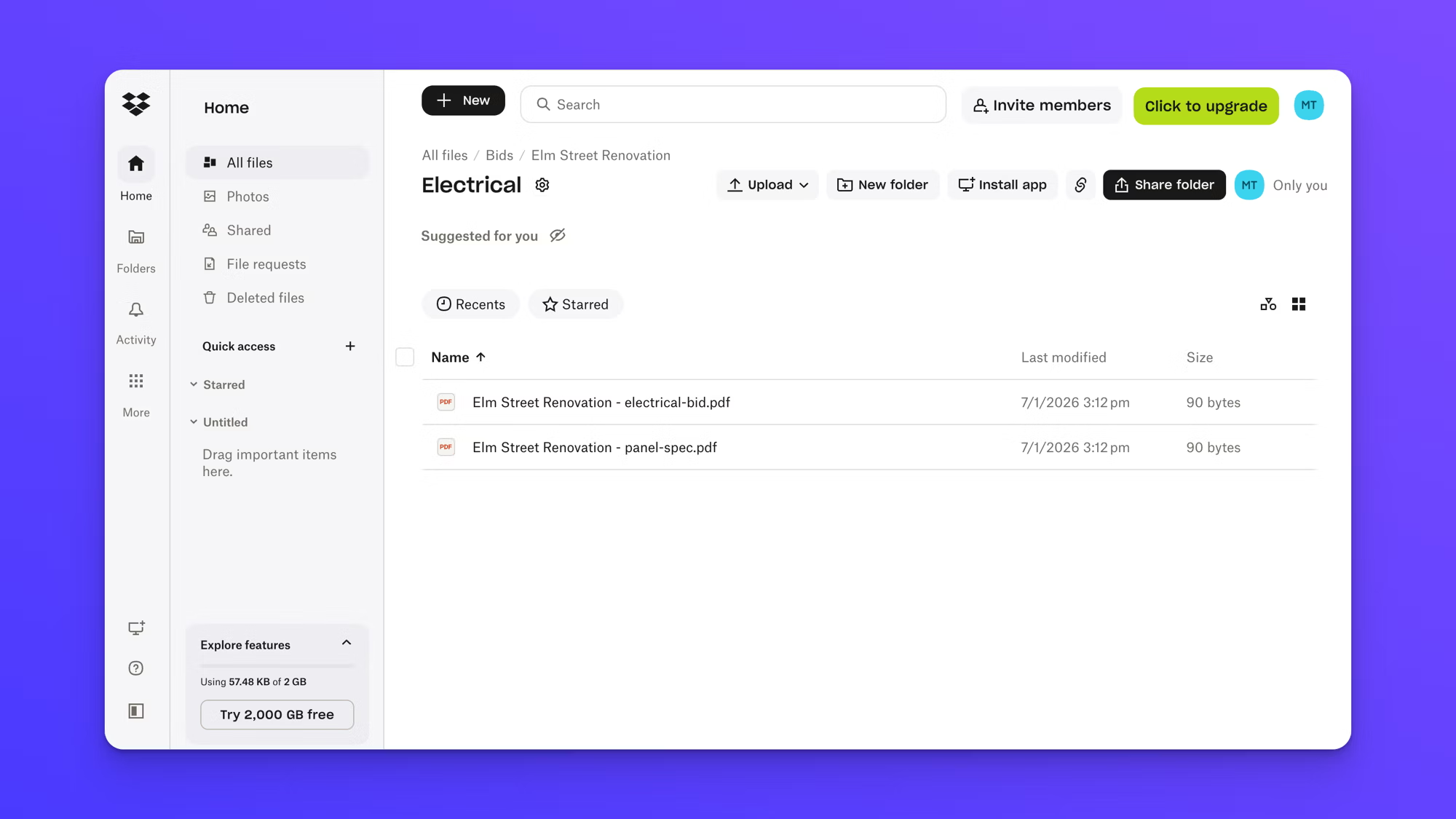
When someone submits through your form, each file is delivered into the Dropbox folder you chose. If you have added form fields like client name or project ID, EZ File Drop can use that data to create a subfolder per submission automatically, and to add form values as a prefix to the file name.
For example, if Sarah Johnson uploads “headshot.jpg” through a form that collects her name, the file arrives in your Dropbox as “Sarah Johnson - headshot.jpg” inside a “Sarah Johnson” subfolder. If that folder already exists, new uploads go into it rather than spawning a duplicate. You never have to rename files or move them.
You can also nest organization deeper. A creative agency collecting deliverables across multiple clients might use form fields for “Client” and “Project Phase” (Discovery, Design, Final Assets), so each submission is delivered into /Client Work/[Client Name]/[Project Phase]/[filename] automatically. A construction company collecting subcontractor RFP responses might use “Trade” and “Project” fields to land each submission in /Bids/[Project]/[Trade]/[filename], ready for review without any manual sorting.
The principle is that whatever organizational structure your existing Dropbox workflow uses, EZ File Drop’s dynamic file organization can match it on incoming uploads. For the full walkthrough, see the Dynamic File Organization tutorial.
Security and Privacy When Collecting Files in Dropbox
When you collect client files through any third-party tool, the question of where those files actually live and who can see them matters. Here’s what happens to a file uploaded through an EZ File Drop form on its way to your Dropbox.
The uploader’s browser connects over an encrypted HTTPS connection, with the file encrypted in transit with TLS between the uploader’s browser and AWS S3. The file lands first in a private staging area on Amazon S3, which has no public access and encrypts stored objects at rest. EZ File Drop then delivers the file to your Dropbox using the OAuth2 connection you set up when connecting your account.
Staging is temporary by design. When the transfer to your Dropbox succeeds, the staged copy on S3 is removed within about an hour. If a transfer fails, for example because your destination is full or briefly unreachable, the staged copy is kept so you can retry the delivery from your dashboard for up to 30 days, and EZ File Drop emails you a warning seven days before a staged file is removed. The result is that files spend the minimum possible time outside your own cloud storage. There is no long-term EZ File Drop file repository, so your files live in your Dropbox.
The OAuth2 connection means your Dropbox password never leaves Dropbox’s systems. EZ File Drop receives a token that grants access only to the Dropbox folders you have authorized, and you can revoke that access at any time from your Dropbox account settings.
EZ File Drop forms can require a CAPTCHA to filter out bot submissions, and two-factor authentication is available on your EZ File Drop account itself. For a deeper look at the security model, see the security page.
Key Advantages of Using EZ File Drop with Dropbox
EZ File Drop’s advantages for collecting files into Dropbox come down to a few practical things:
- No login required for the person sending files, so clients and vendors can upload in seconds.
- Private uploads. Each submitter only sees the form, never your Dropbox contents or anyone else’s files.
- Files auto-organize by whatever form fields you define.
- Forms can be shared as a direct link or embedded on your website with no plugins.
- Uploaders can be restricted to specific file types and sizes per form.
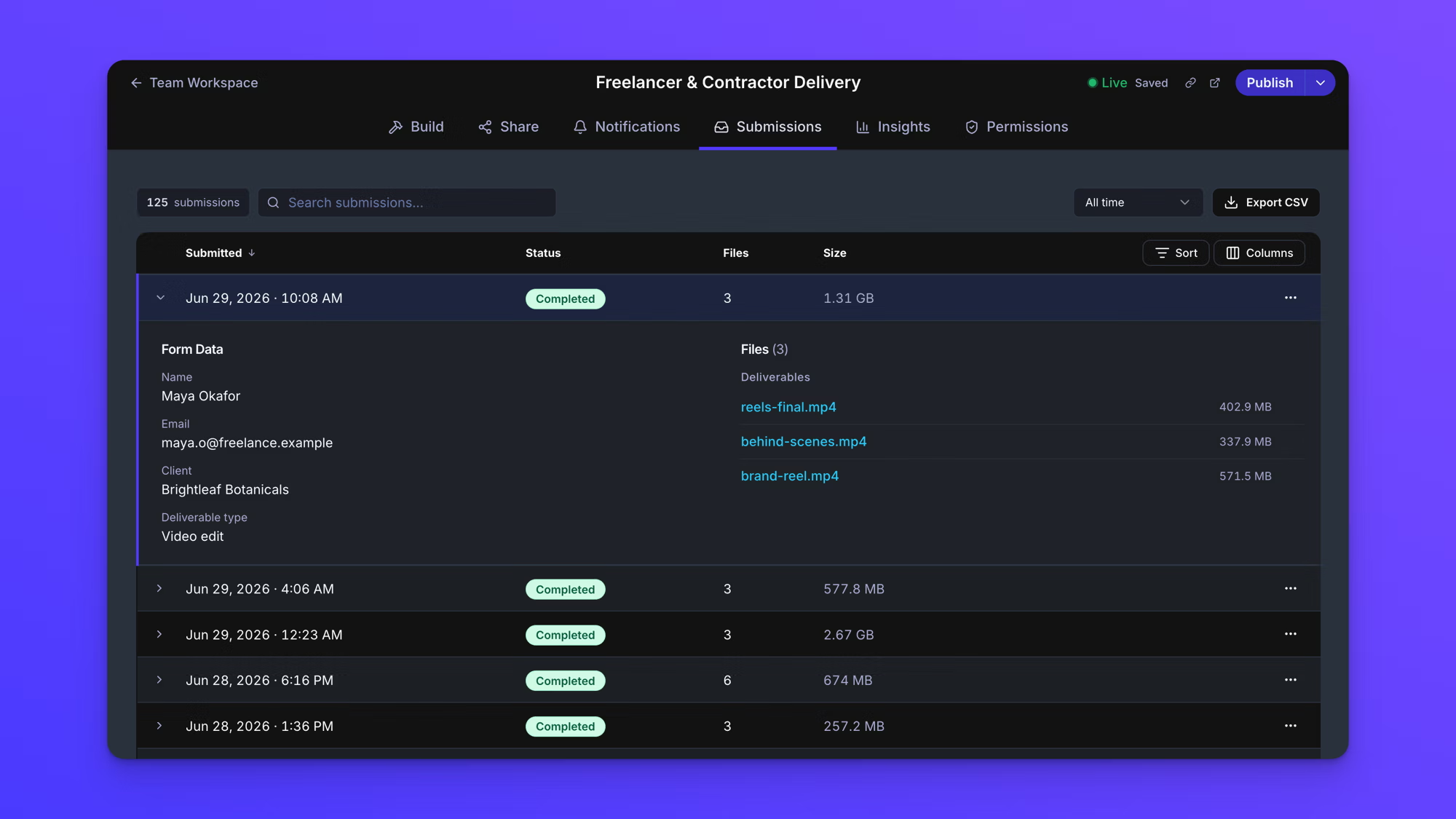
- A searchable record of every submission, so you can look up who sent what and find any file by person or name.
The same workflow also works for Google Drive, OneDrive, Box, and FTP destinations if your team uses different cloud storage. See the equivalent guides for Google Drive without signing in and OneDrive without signing in if those fit your stack better.
When EZ File Drop Isn’t the Right Fit
EZ File Drop is purpose-built for collecting files from external uploaders into your Dropbox, but there are situations where a different tool fits better.
If you only need to receive a single file from a single person one time, Dropbox’s built-in File Request feature is fine. The setup time is shorter and the limitations do not matter for a one-off use case.
EZ File Drop is a one-way tool for receiving files into your cloud storage. It is not built for sending files out to people, or for two-way sharing where both sides add and edit files in the same space. For uploading your own files into your Dropbox, Dropbox’s own desktop and mobile apps are the right tool.
If your file collection has to meet a specific certified-compliance framework, EZ File Drop is not currently certified against those frameworks. Look for a compliance-focused file transfer tool in those cases.
For most receive-side file collection from clients, contractors, vendors, or anyone outside your organization, EZ File Drop is the right fit. Knowing when it is not is just as useful as knowing when it is.
Frequently Asked Questions
Do uploaders need a Dropbox account to use the form?
No. Anyone can upload to your Dropbox through an EZ File Drop form without signing in or creating any kind of account. The uploader sees a branded upload page, drops their files in, and submits. The files arrive in your Dropbox automatically through the OAuth2 connection you set up when you connected your account. The uploader never touches Dropbox’s interface and never needs to know that Dropbox is the destination.
What’s the difference between Dropbox File Request and EZ File Drop?
Dropbox File Request is a basic feature for collecting files into a Dropbox folder without requiring uploaders to have an account. It handles the simplest use case but has no form fields, no custom branding, no automatic file organization, no website embedding, and notifications to the account owner only. EZ File Drop adds all of those capabilities while still using your Dropbox as the storage destination. For most professional file collection workflows, the customization, branding, and organization controls are the difference.
Can I accept uploads from mobile devices?
Yes. EZ File Drop forms work on any device with a modern web browser, including phones and tablets. Mobile uploaders can submit full-resolution files including photos and video without compression. This makes EZ File Drop especially useful for workflows where uploaders are in the field, including construction site documentation, event photography, and mobile-first agency clients.
Is there a file size limit?
The per-submission limit scales with your plan: 5 GB on Starter and 25 GB on Business and Premium. You can set a lower cap per form in the dropzone settings. Separately, each plan includes a monthly upload bandwidth allowance (5 GB on Starter, 100 GB on Business, 1 TB on Premium), and files are delivered into your Dropbox, so your Dropbox plan's storage capacity applies too.
Can I customize which file types are accepted?
Yes, on the Business plan and above. The form’s dropzone settings let you specify which file extensions are accepted and which are rejected. This is useful for ruling out file types that do not fit your workflow, for example a print shop accepting only PDF and EPS files, or a legal practice accepting only PDF and DOCX. Restricting file types up front saves time on the receiving side.
Can I use this with Dropbox Business accounts?
Yes. EZ File Drop connects to both personal Dropbox accounts and Dropbox Business accounts. The connection uses OAuth2, the same authentication standard apps in the Dropbox App Marketplace use. EZ File Drop’s permission scope is read/write access to the specific folders you authorize, not your entire Dropbox.
Getting started
EZ File Drop connects to your Dropbox through OAuth2. Files live in Dropbox, in the folders you point each form at, using your existing storage. Nothing about your Dropbox changes, and if you disconnect EZ File Drop, your account is exactly as it was.
You can try EZ File Drop free with no credit card required. The 7-day trial runs on the Business plan, enough to connect Dropbox, build a branded form, and run real submissions through it. For more detail on how the Dropbox connection works, see the Dropbox integration page.