
Can a Dropbox File Request Be Used to Collect Files From People?
You need a handful of files from a client, a batch of photos from event attendees, or documents from a dozen new hires, and you already pay for Dropbox. So the obvious question is whether Dropbox’s built-in File Request feature can just handle it, or whether you need something more.
It depends entirely on what “collect files” means for you. Grab a few files from someone once? File Request is genuinely all you need. Collect from many people, on a regular basis, with any context attached and your name on the experience? That’s where it starts to strain, because it was built as a quick intake link rather than a real collection workflow.
This article maps the line between those two. First, how Dropbox File Request actually works. Then the seven places it runs out of room once your needs grow. Then what a purpose-built form adds on top of the same Dropbox you already use, so you can decide which side of the line you’re on.
How Dropbox File Request Works
Setting up a Dropbox File Request is straightforward. Log in to Dropbox, click “File requests” in the sidebar, and create a new request. You give it a title, choose a destination folder, and optionally set a deadline or password. Dropbox generates a link you share with the people you need files from.
The person receiving the link clicks it, selects files from their computer, enters their name and email (if they’re not signed into Dropbox), and clicks upload. The files land in the folder you specified. You get an email notification.
That’s the complete workflow. There’s nothing to configure beyond the title, folder, deadline, and password.
Where Dropbox File Request Falls Short
For quick file collection from a small group, Dropbox File Request gets the job done. But as soon as your needs go beyond “send me files,” the limitations add up.
No Custom Form Fields
This is the biggest gap. Dropbox File Request only collects the uploader’s name and email (and only if they’re not signed into Dropbox). You can’t add fields for a project name, department, file category, comments, or any other context.
If you’re collecting files from clients, students, vendors, or team members, you almost always need some context alongside the files. Without form fields, you end up chasing that information through separate emails or messages.
No Branding or Customization
Dropbox File Request pages always show the Dropbox logo and your Dropbox avatar. There’s no option to add your own logo, change colors, customize the layout, or match the page to your brand.
If you’re collecting files from clients or the public, the upload page looks like a Dropbox tool rather than something from your organization. For freelancers, agencies, and businesses that care about how their client-facing touchpoints look, this is a real drawback.
Cannot Be Embedded on a Website
You can’t embed a Dropbox File Request on your website. There’s no embed code, no iframe option, and no way to integrate it into a WordPress, Webflow, Wix, or Squarespace site. The only option is sharing the Dropbox link, which takes people away from your site.
Limited Notifications
Dropbox only notifies the account owner when files are uploaded. The uploader doesn’t get a confirmation email. You can’t notify other team members or third parties. And you can’t customize the notification content or branding.
No Automatic File Organization
All files from a Dropbox File Request land in a single folder. There’s no way to automatically create subfolders based on who uploaded or what project the files belong to. If you’re collecting files from 20 different people, all their files end up mixed together in one folder with whatever file names the uploaders chose.
File Size Limits on Free and Basic Plans
Dropbox Basic, Plus, and Family accounts limit File Request uploads to 2 GB per file. Professional and Business accounts raise this to 50 GB. If you’re on a personal Dropbox plan and need to collect large video files or design assets, the 2 GB cap can be a real problem.
No Zapier or Third-Party Integrations
Dropbox File Request doesn’t connect to Zapier, Google Sheets, or any other automation tool. You can’t trigger workflows when files are uploaded, sync submission data to a spreadsheet, or route notifications to Slack or other platforms.
For a complete walkthrough of the no-account workaround, see our guide on letting anyone upload to your Dropbox without signing in.
What EZ File Drop Does Differently
EZ File Drop connects directly to your Dropbox account and adds everything that Dropbox File Request is missing. Files are still delivered into your Dropbox, but the collection process is far more powerful. If you already know you want this, the fastest path is our Dropbox file request form builder, which walks you through connecting Dropbox and building a branded form in a few minutes.
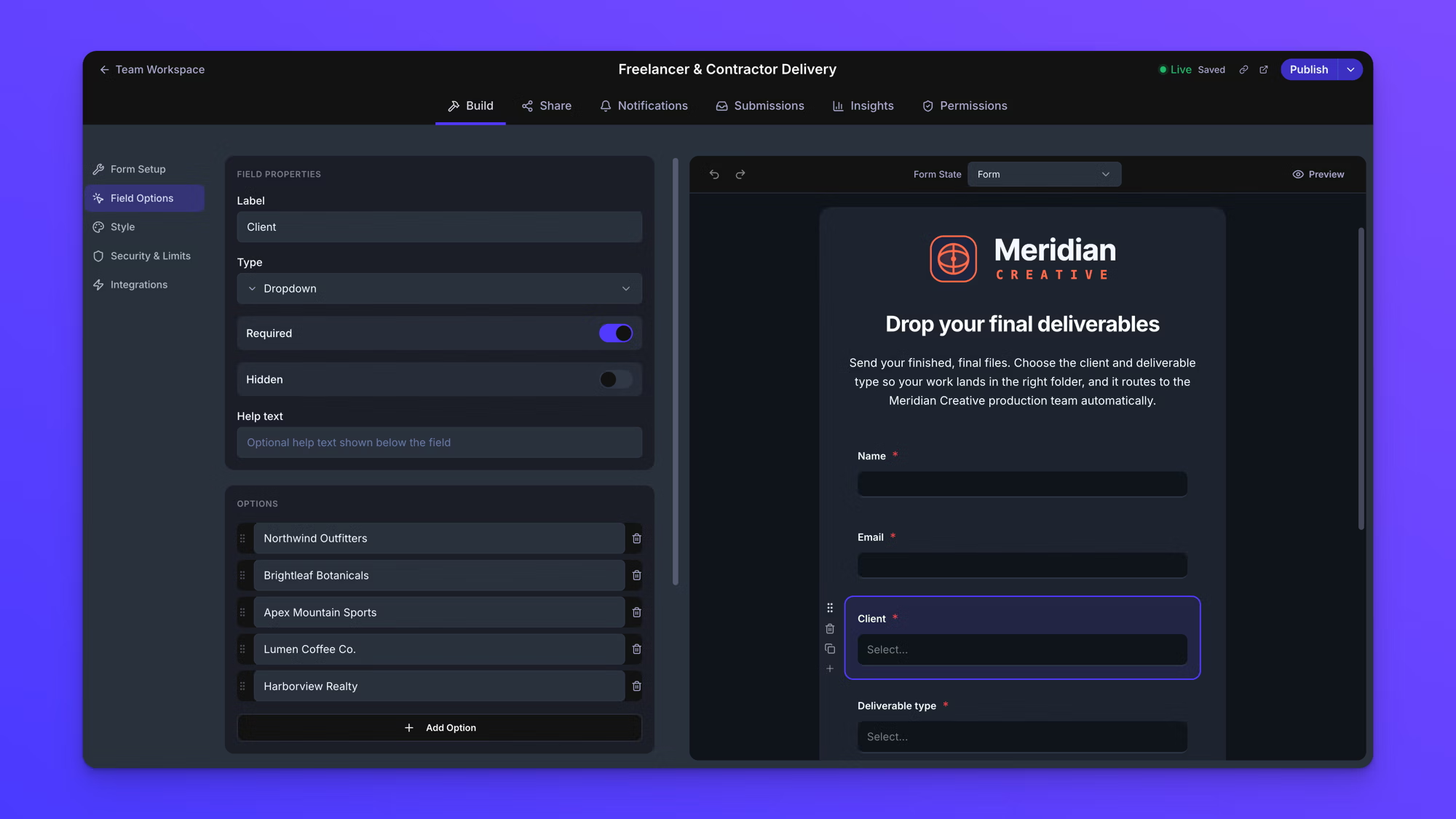
Form Fields
Add text fields, email fields, phone number fields, dropdown menus, radio buttons, checkboxes, and comment boxes to your upload form. Collect any information you need alongside the files. Set each field as required or optional. There’s no limit on the number of fields you can add.
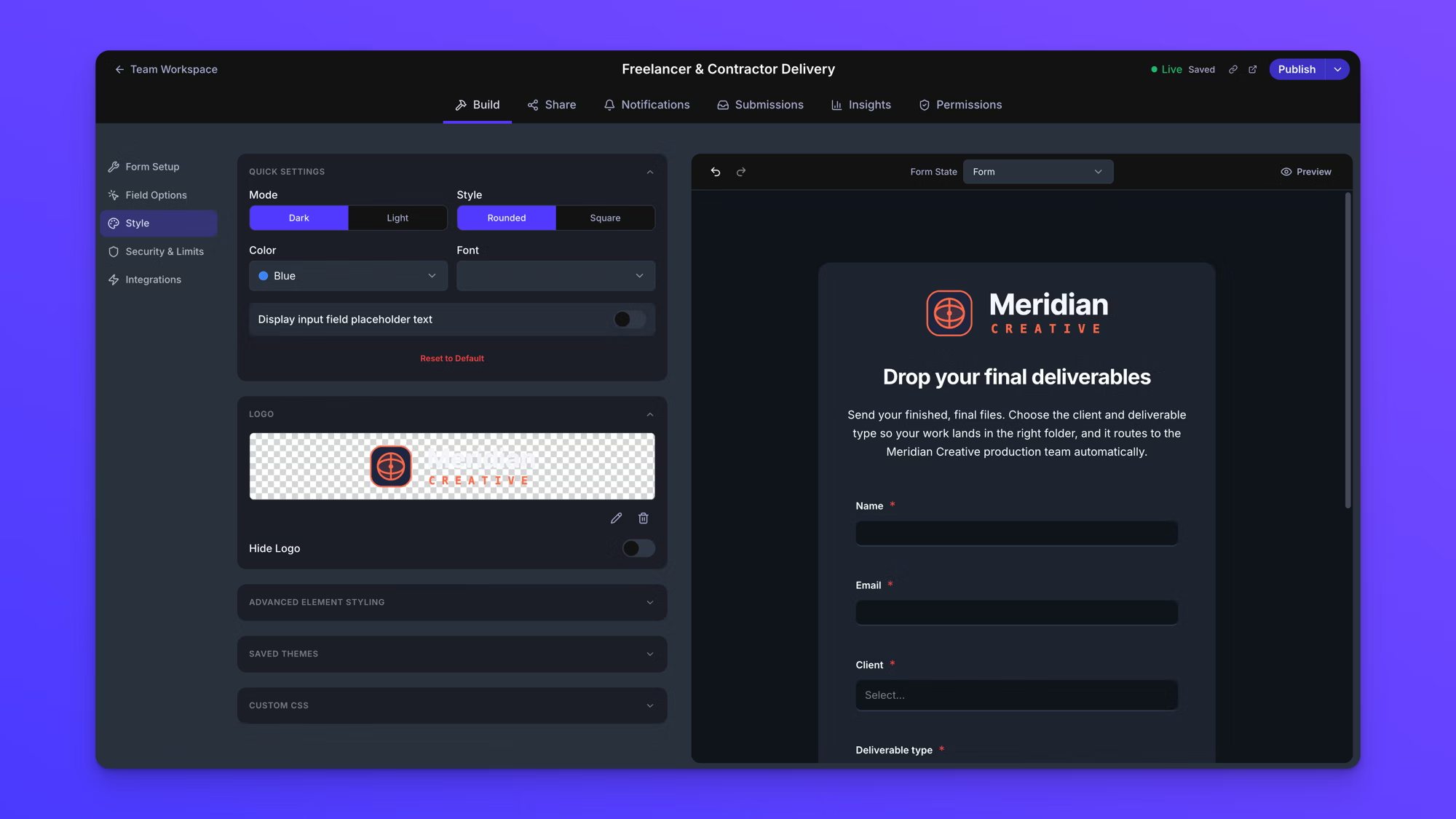
Full Branding and White-Labeling
On Business and Premium plans, upload forms are fully white-labeled. Add your logo, customize colors, fonts, button styles, and backgrounds. The form looks like it belongs to your organization, not to a third-party tool.
Embeddable on Any Website
Every form gets an embed code that works on WordPress, Webflow, Wix, Squarespace, and any site that supports HTML embeds. No coding or plugins required. The embed code includes toggles to show or hide the logo, header, and page text.
Powerful Notifications
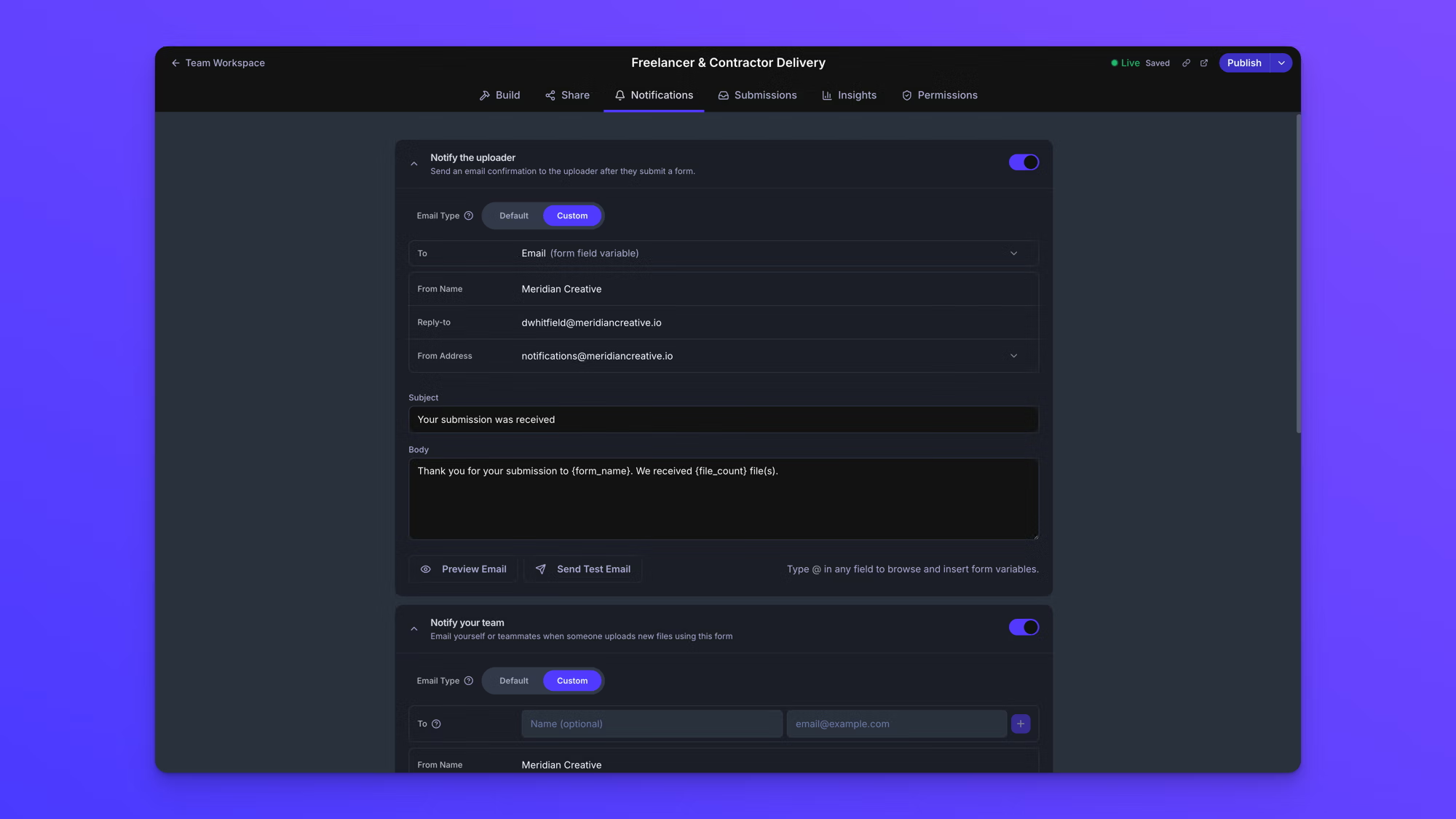
EZ File Drop sends email notifications to three separate groups: the uploader (confirming their submission), your team, and any third-party recipients. Use the default templates or paste custom HTML for fully branded emails. Include variables like file count, form field data, and direct links to uploaded files.
Dynamic File Organization
In each form’s Field Options, an Upload Destination panel controls exactly where that field's files are delivered in your Dropbox. Under Dynamic subfolders, you build a folder path out of your form fields, one layer at a time. Point a layer at your “Client” field and every submission sorts into a subfolder named for that client, with a live preview showing the result (for example, Clients / {Client} / file.pdf). If a folder for that value already exists, new files go into it, so you never end up with duplicate folders. Add more layers to nest deeper, such as client then project.
The File Naming section adds a prefix to incoming file names from the same form fields. Add the fields you want (say Name and Client), and a file that arrives as “sample-file.pdf” is saved with those values in front of it, so you can tell at a glance who sent what. The prefix uses your field values exactly as written, including any dash or space you put between them, and the original file extension is preserved automatically. A separate Rename files option is available when you want to replace the file name entirely rather than just prefix it.
Higher File Size Limits
EZ File Drop’s per-submission limit is far more generous than Dropbox File Request’s free-plan cap: 5 GB per submission on Starter and 25 GB per submission on Business and Premium, versus the 2 GB per file you get on Dropbox Basic, Plus, and Family. For collecting large video files, raw photo sets, or design assets, that headroom is usually the difference between “upload failed” and files that just arrive.
Integrations
EZ File Drop connects to Zapier, so a new submission can kick off whatever happens next in your workflow. Post a message to a Slack channel when files land, add a row to a project tracker, create a task in your project management tool, or send a follow-up email, all without touching the files by hand. Dropbox File Request can’t trigger any of this on its own.
Side-by-Side Comparison
Here’s how Dropbox File Request and EZ File Drop compare on the features that matter most for file collection.
Security and Privacy When Collecting Files in Dropbox
Files uploaded through an EZ File Drop form travel over an encrypted connection and pass through EZ File Drop only in transit on their way to your Dropbox. Nothing is kept long-term on EZ File Drop’s side, so your files live in your Dropbox, accessible only to the people you’ve shared those folders with. The connection to your account uses OAuth, so your Dropbox password is never shared with EZ File Drop, and you can disconnect it any time from your Dropbox settings. If you want to control who can upload, forms can be password-protected and can use CAPTCHA to keep out bots. For the full technical picture, see our file transfer security guide.
When Dropbox File Request Is Enough
Dropbox File Request isn’t bad. It’s just limited. If all you need is a quick link for someone to drop a few files into your Dropbox, and you don’t need form fields, branding, organization, or notifications, it works fine.
It’s a good fit for quick personal file swaps with friends or family, internal requests from colleagues who are already in your Dropbox ecosystem, and one-off situations where you just need a file or two without any context.
When You Need More Than Dropbox File Request
If any of these sound familiar, you’ve outgrown Dropbox File Request: you need to collect information alongside files, you want the upload page to look professional and branded, you’re collecting files from multiple people and need them organized automatically, you need to embed the upload form on your website, you need uploaders to get a confirmation email, or you need to trigger workflows when files are uploaded.
For all of these, EZ File Drop is the natural upgrade. It works with your existing Dropbox account, so your files still end up exactly where you want them. You’re just adding a much more capable intake layer on top. The Dropbox file request form builder is the place to start.
For the same no-account workflow on Google Drive, see letting anyone upload to Google Drive without signing in.
Frequently Asked Questions
Can a Dropbox File Request collect form data along with files?
No. Dropbox File Request only collects the file itself, plus the uploader’s name and email if they’re not already signed into Dropbox. There’s no way to add custom form fields like project name, document type, department, or any other context. EZ File Drop adds custom form fields including text, email, dropdowns, radio buttons, and checkboxes that travel with the upload.
Can I customize the appearance of a Dropbox File Request page?
No. Every Dropbox File Request page displays the Dropbox logo and your account avatar. There’s no option to add your own branding, colors, or messaging. For client-facing workflows where the upload experience represents your business, this is often a deal-breaker. EZ File Drop offers full custom branding including logo, colors, page text, and full white-labeling on Business and Premium plans.
Does Dropbox File Request have a file size limit?
Yes. File Request enforces Dropbox’s plan-tier limits: 2 GB per file on Dropbox Basic, Plus, and Family plans; 50 GB on Professional and Business plans. The cap is set by your Dropbox plan and changes if you upgrade or downgrade. EZ File Drop’s per-submission limit is 5 GB on Starter and 25 GB on Business and Premium, so files that exceed a free Dropbox plan’s 2 GB cap still go through.
Can I get email notifications when someone uses my Dropbox File Request?
The Dropbox account owner receives a notification when a file is uploaded, but the notification is not customizable, not extendable to additional recipients, and the uploader receives only a generic Dropbox success message. EZ File Drop offers customizable email notifications with three recipient groups (uploader, team, third-party) and custom HTML templates.
Can I embed a Dropbox File Request on my own website?
No. Dropbox File Request links live on dropbox.com and can’t be embedded. Visitors have to leave your site to upload. EZ File Drop forms can be embedded on any HTML-capable site (WordPress, Webflow, Wix, Squarespace, custom sites) so the upload happens on your domain.
Is Dropbox File Request secure?
Yes for normal use. Files transfer over an encrypted connection to Dropbox. One thing to know: a Dropbox File Request link has no password on the upload page and no CAPTCHA, so anyone with the link can upload at any time. If you need to control who can upload, EZ File Drop forms can be password-protected and can use CAPTCHA to keep out bots, on top of the same OAuth connection to your Dropbox.
Getting Started
You can try EZ File Drop for free with no credit card required. The trial gives you 7 days on the Business plan with 1 GB of upload bandwidth, enough to connect Dropbox, build a branded form, and run real submissions through it.
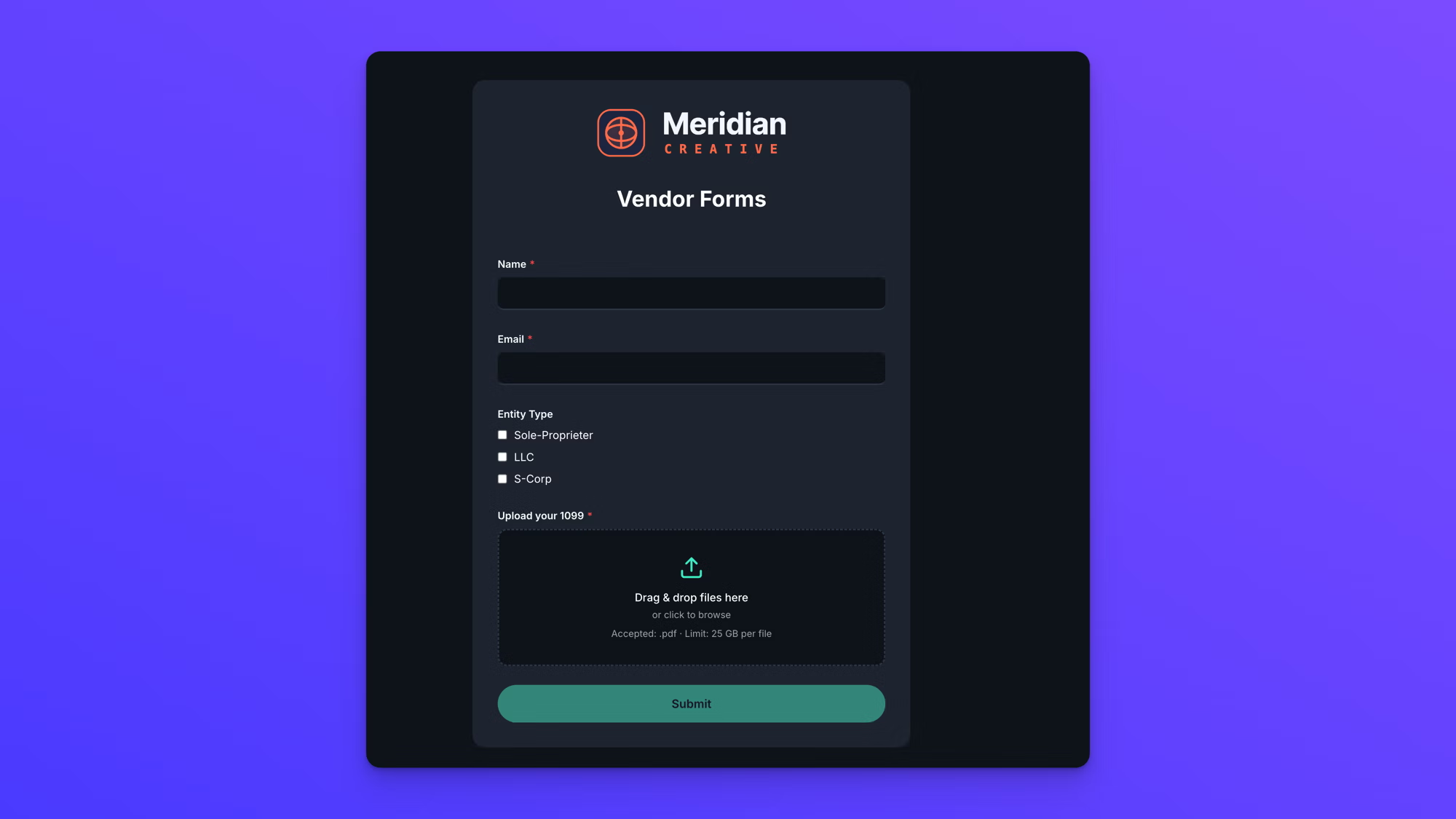
See how EZ File Drop works with Dropbox
Written by Matt Townley